
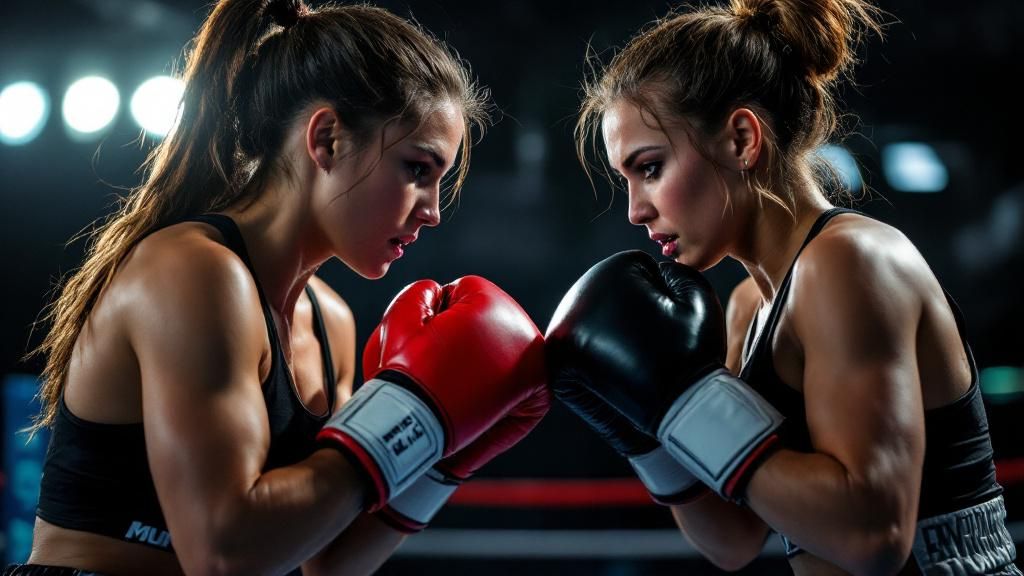
The boxing ring has long been a male-dominated space, yet female pugilists are now claiming the spotlight, overcoming traditional obstacles and rewriting the sport’s history books. From extraordinary viewing numbers to historic prize money, professional women boxers are showing that elite competition has no gender boundaries. This article examines how pioneering fighters are reshaping the sport, breaking barriers both inside and outside the ring, and encouraging the next wave of female fighters to pursue their championship dreams with steadfast resolve.
Emerging Leaders Transform the Sport
The contemporary landscape of boxing competition has undergone a significant transformation, with female fighters establishing themselves as formidable competitors who earn respect and admiration worldwide. These rising champions have fundamentally altered perceptions of women’s boxing, demonstrating exceptional talent, physical prowess, and resolve that rivals their male counterparts. Through their outstanding performances in the ring, they have garnered unprecedented public interest and global recognition, proving that excellence surpasses gender distinctions and enthralling audiences across continents.
Modern female boxers are not simply taking part in the sport; they are fundamentally transforming its very essence and setting fresh standards of excellence. Their accomplishments go further than championship titles and record-breaking victories, reflecting a broader social change within the boxing community. By showcasing their technical skill, psychological strength, and drive to compete, these athletes inspire younger generations to pursue careers in professional boxing whilst also confronting outdated stereotypes and promoting increased inclusivity within elite sporting environments worldwide.
Record-Breaking Accomplishments and Milestones
The past decade has witnessed exceptional success by women boxers, profoundly changing the structure of professional boxing. These competitors have surpassed historic records, claimed unprecedented championships, and drawn focus on the grandest stages in the world. From breaking attendance records at major events to obtaining television contracts that match their male counterparts, female boxers have demonstrated their commercial viability and sporting excellence. Their successes extend beyond personal accolades, prompting organisational changes within boxing governing bodies and boosting the sport’s profile globally, demonstrating that women’s boxing deserves equal investment and recognition.
Championship Wins
Katie Taylor’s groundbreaking achievements demonstrate the significant impact of women’s boxing prowess. Becoming the first woman to headline Madison Square Garden’s main event, Taylor won undisputed lightweight titles and later moved up weight divisions, achieving super-lightweight supremacy. Her success at various weight divisions has earned international acclaim and substantial commercial partnerships, establishing higher standards for female boxers worldwide. Taylor’s strategic brilliance, combined with her technical prowess, proves that female boxing can deliver compelling, world-class entertainment that engages viewers and creates significant commercial appeal.
Claressa Shields has likewise rewritten boxing’s record books, establishing herself as the undisputed titleholder throughout numerous weight divisions in exceptionally rapid timeframes. Her devastating striking ability, defensive mastery, and ring intelligence have earned her acclaim as weight-for-weight one of boxing’s greatest competitors, regardless of gender. Shields’ capacity to move seamlessly between weight classes whilst preserving her titles constitutes an exceptional achievement in professional boxing. Her sustained excellence and high-profile matchups have substantially boosted women’s boxing’s visibility, attracting mainstream media coverage and showcasing the sport’s market viability.
Canelo Alvarez’s rival, Terence Crawford, has acknowledged that top-tier women boxers now perform at levels on par with top male competitors. This acknowledgment demonstrates the authentic calibre and vigour of women’s championship bouts, which now showcase technical excellence, tactical sophistication, and compelling competition. Recent title bouts between elite female boxers have produced unprecedented viewing figures, questioning traditional perceptions about women’s sports entertainment value. These accomplishments validate years of advocacy by women athletes and bodies promoting gender equality in the professional boxing sphere.
The rise of undisputed champions across various weight divisions demonstrates the wealth of expertise within professional women’s boxing. Athletes winning belts from several established governing bodies simultaneously represents an remarkable accomplishment, requiring victories against world-class opponents in back-to-back matches. These milestones have secured backing from leading promotional firms and broadcasters, opening doors for women boxers to obtain considerable purses matching male counterparts. Championship victories increasingly command primetime television slots, reflecting genuine audience interest and the sport’s progression toward true gender equality.
Addressing Systemic Barriers
Professional female boxers have confronted significant institutional obstacles that historically limited their participation and advancement. Disparate financial resources, limited media coverage, and unfair policies have long plagued women’s boxing. However, current fighters are systematically dismantling these barriers through persistent advocacy, legislative efforts, and remarkable performances. Principal boxing federations have gradually reformed procedures, establishing wage parity programmes and broadened competitive pathways. These systemic reforms demonstrate increased acceptance that women competitors warrant equitable treatment and resources comparable to their male competitors.
Beyond policy changes, female boxers are transforming attitudes through outstanding performance and marketability. Sponsorship deals, broadcast agreements, and international recognition have substantially improved financial prospects for top-level athletes. Younger generations benefit from trailblazing competitors who secured improved terms and exposure benchmarks. Community development initiatives actively promote women’s involvement, creating robust talent pipelines. This societal change demonstrates that structural transformation emerges when athletes persistently challenge traditional norms, alongside enabling structures and genuine organisational commitment to gender equality within the professional sport.
The Future of Female Boxing
The path of women’s boxing suggests remarkable expansion and potential. Leading media organisations are actively committing resources in female boxing events, acknowledging the commercial viability and compelling narratives these competitors bring. With increased television coverage comes improved sponsorship opportunities, improved training facilities, and increased prize money. Younger generations of female boxers are entering the sport with existing professional frameworks, positioning them to pursue boxing as a sustainable career rather than a marginal pursuit. This trajectory suggests that gender equality in boxing at the professional level is not merely aspirational but growing ever more certain.
Looking ahead, the sport faces exciting possibilities for growth and development. Developing regions are establishing flourishing female boxing programmes, whilst established boxing nations keep reinforcing their women’s divisions. Global regulatory organisations are introducing forward-thinking measures supporting equal participation and equitable pay. The following ten years will probably see additional innovation in training methodologies, higher engagement at community level, and ongoing record-shattering performances. As these barriers fade away, women’s boxing will firmly establish its place as a pillar of modern sport, motivating numerous competitors to pursue excellence in the ring.
