
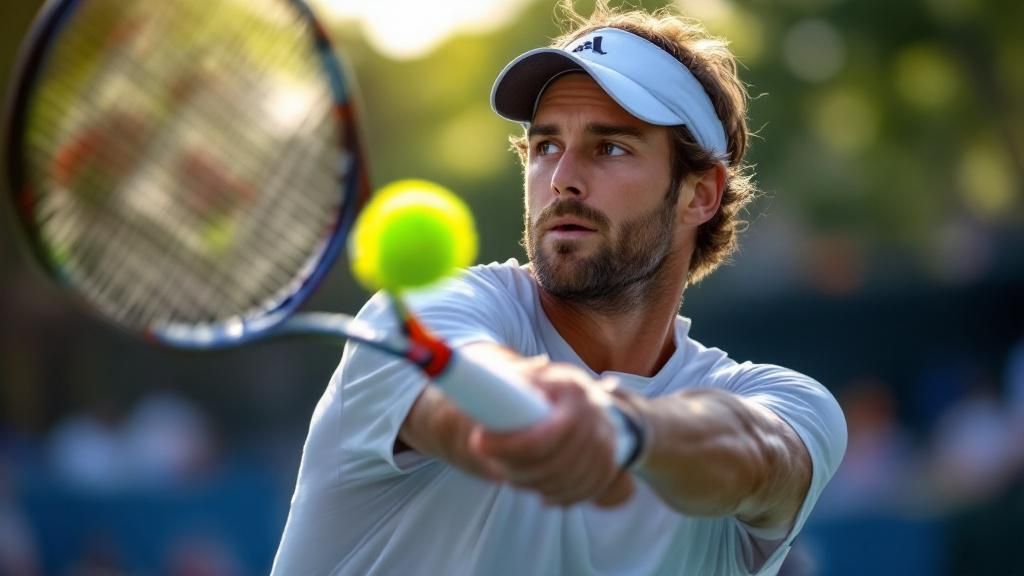
Tennis calls for forceful athleticism, lightning-fast movements, and unwavering mental resilience—yet even the most talented players confront a formidable adversary: bodily harm. From Roger Federer’s strategic rest periods to Serena Williams’ meticulous conditioning routines, elite competitors have honed the art of injury prevention. This piece explores the essential techniques these champions utilise to sustain optimal fitness whilst safeguarding their physiques. Discover the evidence-based approaches, training protocols, and restoration techniques that distinguish elite performers, facilitating prolonged tournament performance at tennis’s highest echelons.
Active Warm-Up Routines and Movement Preparation
Elite tennis players understand that a thorough warm-up routine extends far beyond simple static stretching. Dynamic warm-up protocols form the foundation of injury avoidance, preparing muscles, joints, and the aerobic system for the intense demands ahead. Elite competitors implement structured routines that elevate heart rate progressively whilst activating stabiliser muscles crucial for tennis movements. These protocols typically incorporate low-intensity cardiovascular work, active mobility work, and sport-specific movements that mirror match conditions, ensuring the body transitions smoothly from rest to competitive intensity.
Movement preparation supports dynamic warm-ups by tackling mobility limitations and muscle imbalances. Tennis players dedicate considerable time to improving joint mobility, especially in the shoulder, hip, and ankle joints—areas subjected to extreme stress during play. Employing foam rollers, mobility drills, and targeted stretching sequences, players systematically improve their movement capacity. This investment in mobility reduces compensatory movement patterns that often trigger injury, whilst also improving stroke efficiency and court coverage capabilities.
Match Preparation Routines
Pre-match warm-up sequences serve as the last preparatory phase prior to match play begins. Skilled performers employ sport-specific drills that psychologically ready them whilst physically conditioning their muscle-nerve connections. These routines typically last around twenty minutes and include gradually intensifying actions, directional changes, and explosive actions replicating competitive conditions. By gradually increasing intensity, players achieve ideal activation states whilst allowing their bodies to reach peak performance readiness whilst avoiding early fatigue onset.
Tennis-specific activation includes side-to-side motion, rapid acceleration, and twisting movements that engage the core muscles vital for injury prevention. Players perform shadow strokes, shuttle sprints, and agility ladder work to activate fast-twitch muscle fibres and improve movement technique. This strategic approach guarantees that the muscular, tendon, and proprioceptive systems perform at their best from the start of play, markedly decreasing risk of injury in the crucial early stages of the match when players are most vulnerable to sudden injury.
Court-Tailored Motion Readiness
Court-specific activation planning adapts preparation routines to the unique demands of tennis surfaces and match conditions. Professional athletes modify their movement patterns according to court type—clay courts necessitate different movement patterns than hard courts, whilst grass requires greater directional stability. This court-tailored warm-up guarantees optimal muscle activation and movement mechanics for the relevant playing surface. Coaches and athletes work together to create routines that address surface-specific injury risks, maximising performance whilst reducing susceptibility to damage related to different court characteristics.
Environmental factors substantially shape preparation strategies utilised by elite professionals. Temperature, humidity, and court conditions demand individualised pre-match modifications to sustain optimal muscular flexibility and joint lubrication. Players monitor these variables carefully, modifying intensity and duration accordingly. This flexible methodology demonstrates the refinement of current protective measures, wherein professionals understand that static protocols prove insufficient for managing the changing conditions encountered throughout match play. Such careful consideration exemplifies elite-standard performance.
- Perform side-to-side movements across the baseline for improved side-to-side balance.
- Execute explosive split-steps to activate stabilising muscles in the legs.
- Complete rotational lunges addressing core engagement and hip range of motion.
- Practise directional changes simulating match-point scenarios precisely.
- Conduct incrementally challenging sprint work building cardiovascular readiness systematically.
Strength Training and Physical Conditioning
Professional tennis players understand that robust muscular conditioning forms the foundation of injury avoidance. Comprehensive strength training programmes address all primary muscle zones, boosting stability and resilience throughout the body. By building balanced musculature, players significantly reduce the risk of repetitive strain injuries and sharp impact injuries. Elite competitors dedicate considerable time to planned conditioning regimens, ensuring consistent progression whilst maintaining optimal performance during tournament play.
Modern tennis demands dynamic bursts of power and quick shifts in direction, requiring sport-specific strength development. Players employ resistance training, explosive movement drills, and compound movements that simulate match demands. This strategic training develops stabiliser muscles often overlooked in traditional conditioning. As a result, players gain improved movement efficiency, increased force production, and markedly lowered injury vulnerability, enabling them to compete at elite levels across prolonged competitive periods.
Central Core Strength Development
The central musculature forms the kinetic chain’s focal point, managing force transmission between upper and lower body segments. Professional players emphasise core stability through targeted exercises including planks, rotation work, and anti-rotation exercises. A strengthened core improves balance, reduces spinal stress, and enhances serve and groundstroke mechanics. Sport-specific core training directly translates to reducing injuries, enabling players to perform powerful shots whilst maintaining postural control and balance.
Comprehensive core conditioning goes further than basic ab work; professional performers implement advanced stabilisation systems addressing the transverse abdominis, oblique muscles, and deep stabilisers. Dynamic core work performed on shifting platforms further challenges proprioceptive systems. This integrated system reinforces the body’s central foundation, distributing forces effectively throughout dynamic actions. Therefore, players gain improved movement control, minimised lower back tension, and greater athletic capacity across challenging fixture lists.
Lower Limb Durability Training
Lower body strength directly correlates with injury prevention in professional tennis, where explosive leg movements produce force for serves, rallies, and court positioning. Thorough lower body training regimes focus on quad, hamstring, glute, and calf strengthening. Players implement progressive resistance training, single-leg exercises, and match-simulation drills reflecting competitive requirements. This focused conditioning protects knees, ankles, and hips from repetitive strain whilst improving mobility and control and career durability.
Elite specialists recognise that balanced lower body conditioning reduces compensatory movement patterns that precipitate injury. Unilateral exercises, particularly single-leg squats and lunges tackle strength imbalances across legs. Eccentric loading methods strengthen muscles throughout the lengthening phase, crucial for controlling rapid directional changes and decelerations. These sophisticated conditioning methods significantly decrease anterior cruciate ligament injuries, meniscal injuries, and chronic joint conditions, enabling sustained competitive participation at elite competitive standards.
- Single-leg squats develop unilateral strength and stability during movement
- Bulgarian split squats build quad and glute power effectively
- Nordic hamstring curls target back of the leg eccentric strength
- Lateral lunges target adductors and improve lateral movement control
- Calf raises enhance ankle strength and propulsive force generation
Rehabilitation Strategies and Extended Injury Care
Elite tennis professionals recognise that recovery matters just as much as the training process. Strategic rest days, paired with focused rehabilitation sessions, permit the body to heal small muscle tears and reconstruct more resilient muscle tissue. Top players utilise systematic training periodisation across the season, cycling through intense competition blocks and deliberate recovery phases. This approach reduces progressive exhaustion and sustains peak physical condition whilst lowering risk of injury throughout important tournament windows.
Long-term injury management requires a thorough, multidisciplinary approach involving physiotherapists, sports medicine specialists, and strength coaches. Professional players assess biomarkers, utilise advanced imaging technology, and maintain thorough injury logs to identify patterns and vulnerabilities. By resolving underlying biomechanical issues proactively rather than reactively, elite athletes lengthen their careers substantially. Regular dialogue between medical teams and players ensures customised recovery protocols that adapt with individual needs and competition schedules.
- Introduce ice baths and cryotherapy right after demanding matches
- Arrange consistent deep tissue massage appointments weekly during the season
- Use elevation and compression therapy to minimise inflammation efficiently
- Ensure comprehensive sleep hygiene with eight to ten hours of sleep each night
- Add recovery days with active work featuring light stretching and swimming
